

Description
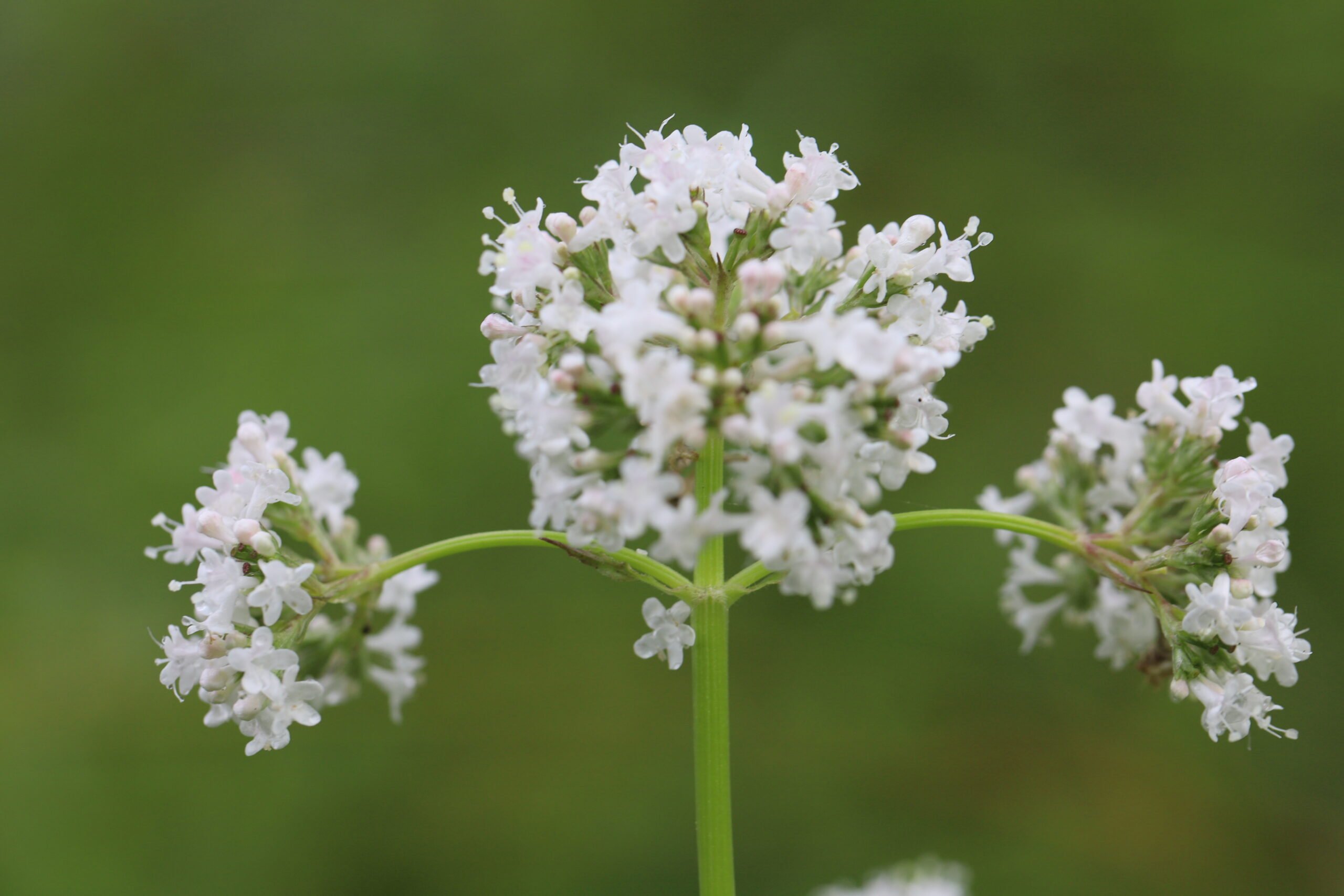
Common valerian is a native perennial plant known for its pleasant, vanilla-like fragrance. Its flowerheads form rounded clusters of small pink to white flowers. This species is highly variable, growing between 50 and 200 cm tall, but all forms share stout, erect stems that are either unbranched or sparsely branched.
The bright green leaves are pinnate, typically with 9–13 lanceolate, usually toothed leaflets. In contrast, the closely related Marsh Valerian has basal leaves that are not pinnate but consist of an oval blade on a long stalk. Flowering occurs from June to late August, and seeds ripen from late summer to mid-autumn. Each seed carries a feathery plume of hairs, aiding wind dispersal.
Habitat
The variability of common valerian reflects its wide range of habitats.
Dry habitats: The diploid subspecies collina thrives on dry, calcareous soils. It is smaller, with leaflets that are usually untoothed or only slightly toothed. This form is mainly found in southern and central England in dry grasslands, woodland edges, and hedge banks.
Wet habitats: The tetraploid subspecies sambucifolia is more robust, with deeply toothed leaflets. It is widespread in wet woodlands, ditches, fens, marshes, and damp grasslands. It has a particular associated with tall-herb fen communities that contain milk parsley (M27) and in meadowsweet/wild angelica mire habitats (S24). This is probably the subspecies of our seed.
Although the plant can spread vegetatively via short stolon’s, insect pollination and seed production are far more significant. The nectar is located at the base of a long, narrow tube, suggesting adaptation for pollinators with long, flexible tongues. Butterflies and moths are likely the main pollinators, though short-tongued species such as craneflies, mosquitoes, and caddisflies are also frequent visitors.
Valerian root has a long history in herbal medicine as a remedy for anxiety and as a sedative. While clinical trials have shown mixed results, it remains widely available as a dietary supplement.
Growing Information
In nature, seeds are shed from late summer to mid-autumn, which is also an ideal time for outdoor sowing. Alternatively, seeds can be sown from early March to late April.