

Description
An attractive orchid with a dense spike of flowers marked with dark spots or lines is likely to belong to the genus Dactylorhiza. Helleborine flowers have pouched lower lips; fragrant and butterfly orchids have long spurs behind the flowers; and Early-purple Orchid, along with some rarer related species, has narrow, membranous bracts shorter than the flowers. In Dactylorhiza, the bracts are leaf-like and usually as long as, or longer than, the flowers.
Identifying Dactylorhiza to species level can be difficult. Flowers are often similar between species and may vary considerably within a population, while hybridization is relatively common. Marsh orchids can be distinguished from spotted orchids by their hollow stems. Flowering stems should never be cut or picked, but a gentle squeeze is usually sufficient to check.
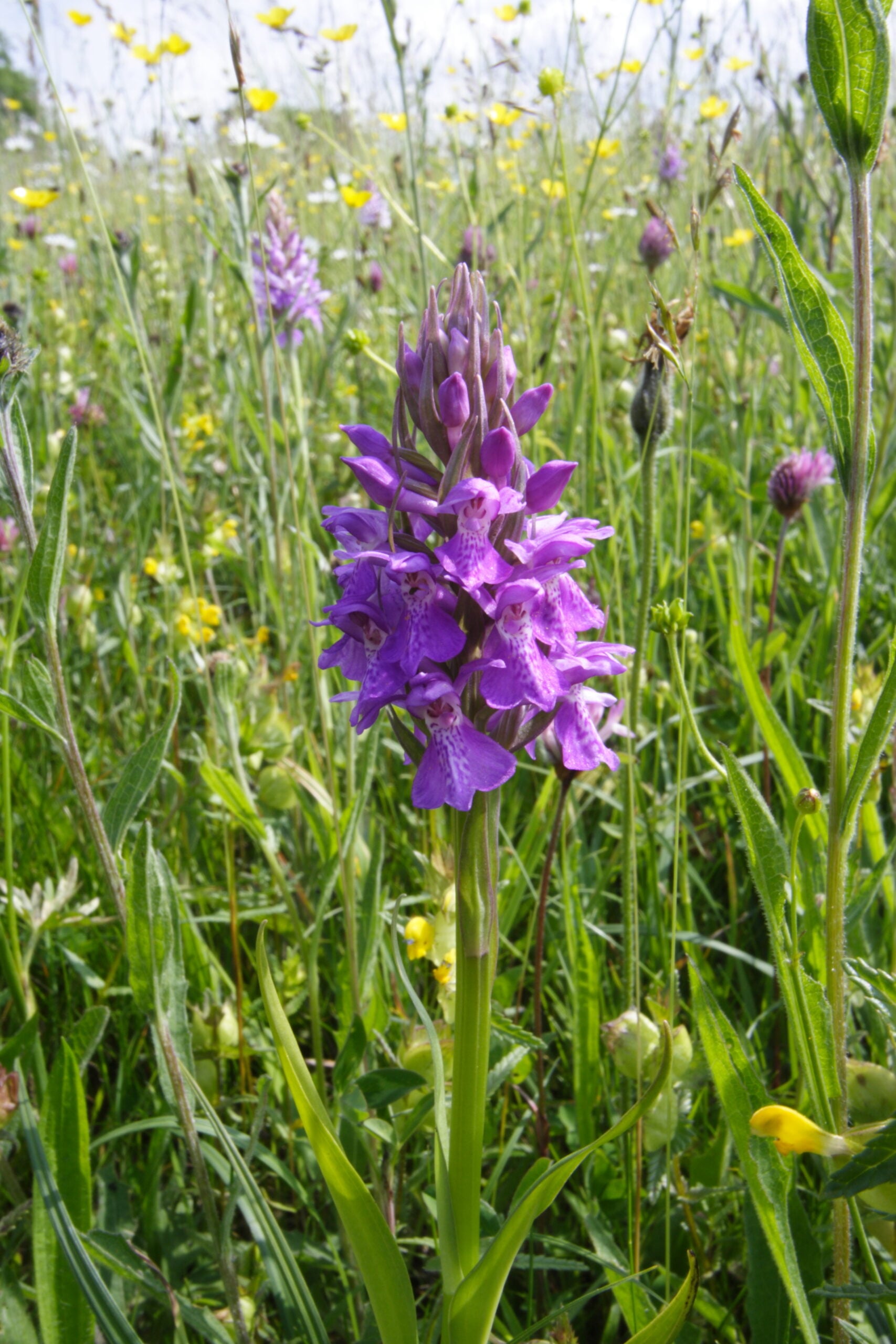
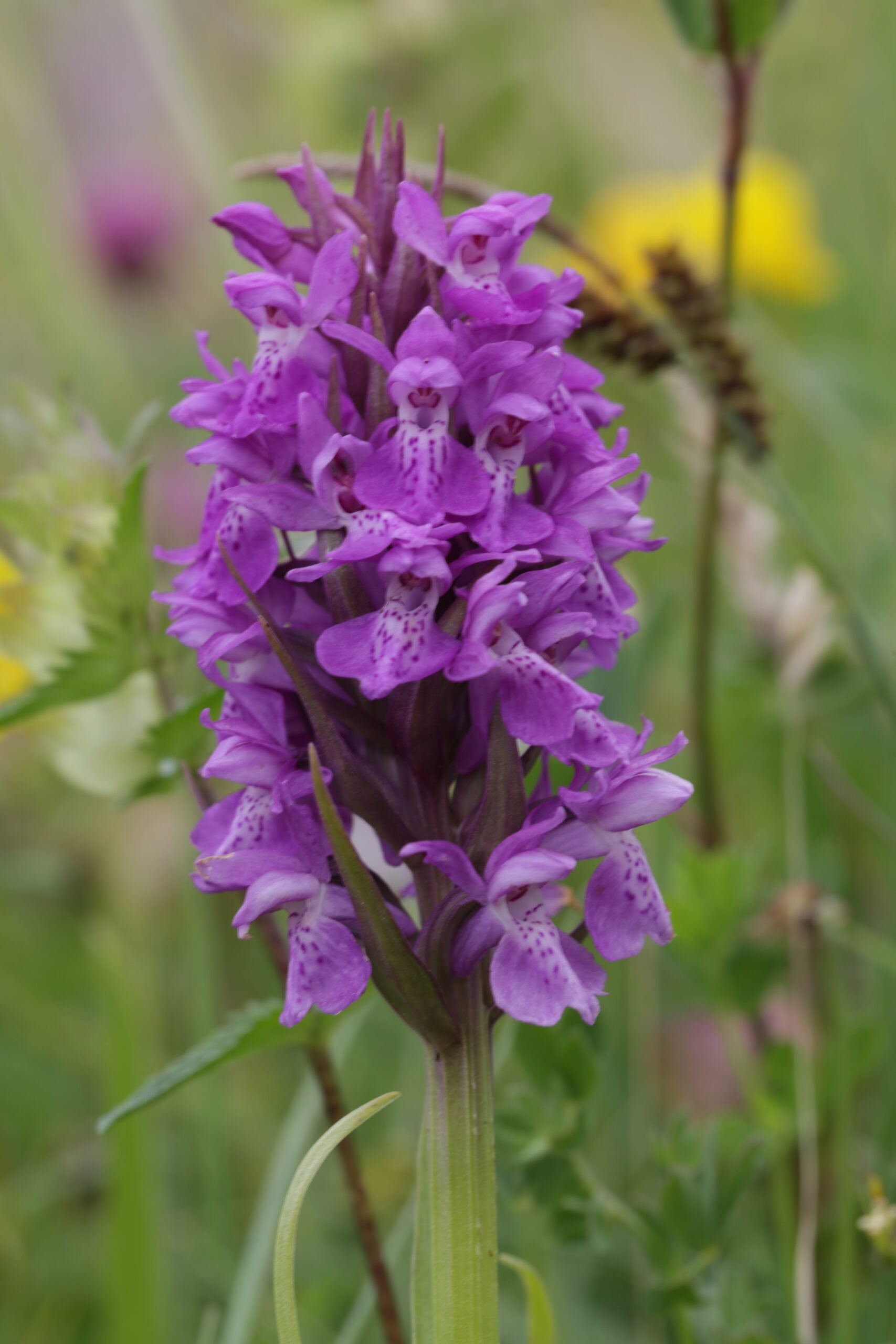
Southern Marsh-orchid is highly variable, but our seed is collected from plants showing a typical form in suitable habitat. It produces dense, cylindrical spikes of rich purplish-pink flowers. The leaves are strongly keeled, usually unspotted or with only a few small spots, and fan out towards the base.
Habitat Information
Southern Marsh-orchid is a perennial native to calcareous marshes, fens, damp meadows and dune-slacks. It also occurs in man-made habitats, including road verges, quarries and waste ground. It can tolerate some less acidic bogs and wet heathland, but is absent from sites that remain waterlogged for long periods and is very rare on dry soils such as chalk downland.
The species is most widespread and locally abundant in southern and central England and south Wales, while Northern Marsh-orchid is more frequent in north Wales, Cumbria, Northumberland and Scotland. There is considerable overlap, however, and Southern Marsh-orchid occurs as far north as Anglesey, Cumbria and Northumberland. Its range appears to be expanding and although some natural habitats have been lost to drainage it has increased in some man-made habitats.
Growing Information
Seed is best sown in autumn, either over-sown into cut and harrowed existing vegetation or onto bare ground at, or shortly after, sowing a meadow mix. It can also be sown in pots. For further guidance on pot culture and other establishment methods, we strongly recommend joining the Hardy Orchid Society or visiting their website.
Seed Content
NB: SEED SUPPLIED WITH SOIL GRANULES. Pure Orchid seed is extremely fine dust-like with an estimated million seeds per gram! It is tricky to handle and liable to blow away in the wind. For this reason the seed we offer has been combined with soil granules to aid handling and dispersal to the ground.
The orchid seed offered here is sold as a mix of soil granules and seed. Each gram you purchase below is made up of 1 part seed to 99 parts soil granules by weight, and will contain an estimated 10,000 orchid seeds.
Both the cost and seed numbers per gram reflect the number and value of seeds contained in each gram ordered.