

Description
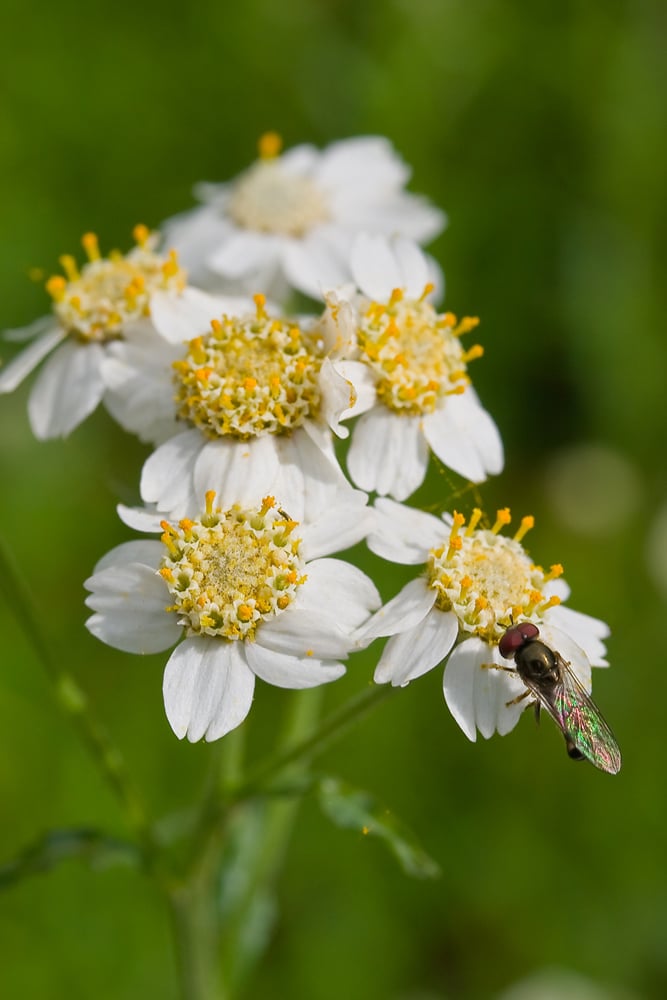
Sneezewort is an attractive, upright, medium-sized native perennial. Its blooms are not single flowers but clusters of many tiny florets packed into a central disc, surrounded by petal-like ray florets—characteristic of the daisy family. Like its close relative, yarrow, these flower heads are arranged in umbel-like clusters.
Sneezewort can be distinguished from yarrow by its larger, whiter flower heads and its sharply toothed, lance-shaped leaves, which are about 6 cm long and dark green. Flowering typically occurs from July to September.
Habitat information.
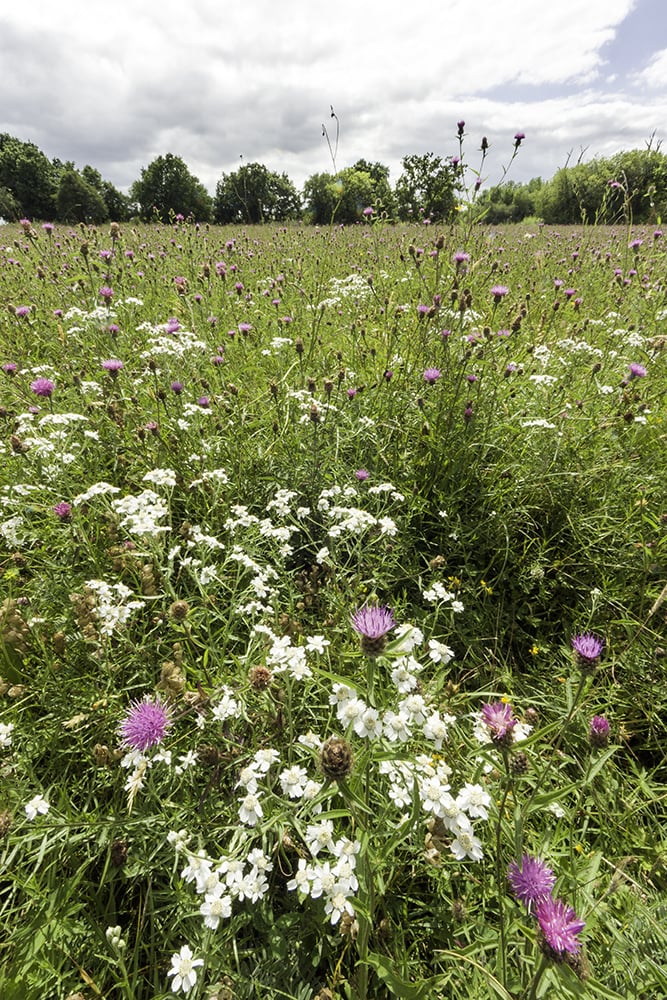
This species thrives in damp to wet, infertile, and acidic environments such as fen meadows, floodplain meadows, rush pastures, springs, flushes, mires, and alder wet woodlands. Although still widespread across Britain, Sneezewort has declined significantly due to drainage schemes and habitat loss—especially in southern regions, where it is often considered a county rarity.
Sneezewort is an important source of pollen and nectar for small generalist and short-tongued pollinators, particularly hoverflies. It is mildly toxic to horses and, to a lesser extent, cattle and sheep. However, its bitter taste means it is usually avoided and rarely causes problems.
Growing Information.
Literature suggests that naturally shed seeds germinate in autumn, but I have found most of our seedlings appear in the spring. Therefore, sowing outdoors from late summer to mid-autumn is recommended. For indoor cultivation, sow seeds onto moist, well-drained compost and keep them in a warm location at 18–22°C.