



Search Results: A-guide-to-selecting-species

Silene noctiflora - Night-flowering Catchfly

Night-flowering catchfly is a medium height annual similar in appearance to white campion but covered with sticky hairs (hence the common name catchfly), and with more deeply notched petals. The flowers also differ in colour being white or pink on top and creamy yellow on the back. Flowers from July to September. The petals remain rolled up in the day opening out in the evening and remaining open throughout the night.

Betonica officinalis - (Stachys officinalis) - Betony

Betony is a medium height, slightly hairy grassland perennial. A member of the Dead-nettle family it has a square stem and in common with other Stachys the flower consists of a hooded upper lip containing four stamens and a three lobed lower lip. The flowers, which are present from June to October, are a bright purple-red or (as can be seen in the main photograph) occasionally white. The leaves have a distinctive blunt toothed shape. NB Until recently this species was know by the old botanical name of Stachys officinalis.

Stachys sylvatica - Hedge Woundwort

Hedge woundwort is a medium height perennial covered in rough hair and with a pungent smell when crushed. The leaves are stalked, dark green and shaped like an elongated heart. The flowers, which are arranged in whorls, are a dark reddish purple covered in white blotches. Flowers from June to October.

Succisa pratensis - Devil's-bit Scabious

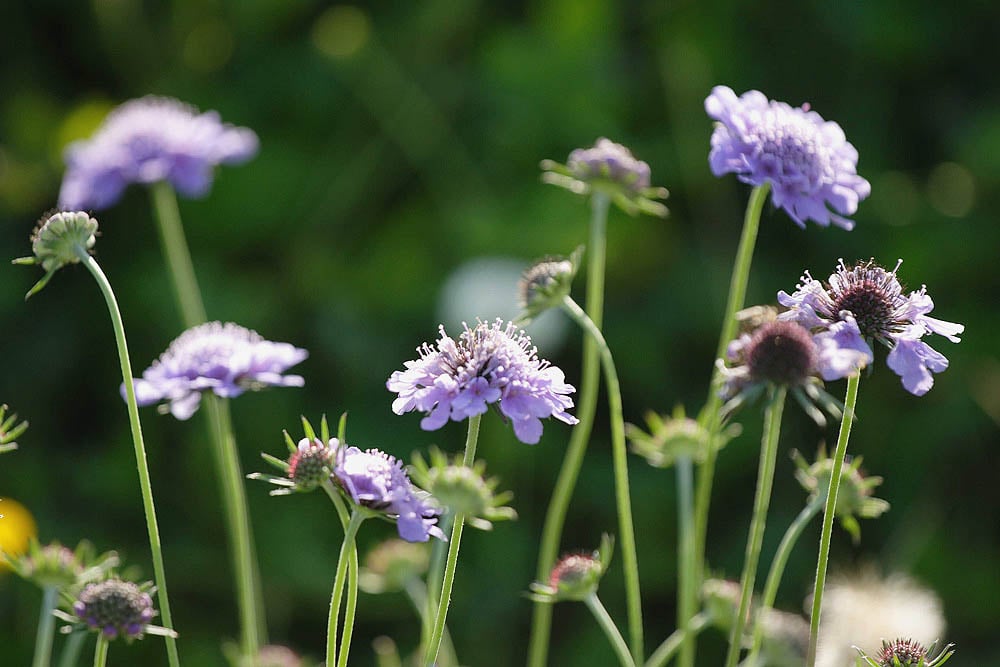
Sorry but we have now sold out of this item. Devil's-bit scabious is so named because its roots end abruptly as though bitten off by the devil. It has a distinctive dark violet-blue, roundish ‘pincushion’ flower-head backed by green bracts. The leaves of the basal rosette are elliptical, dark green and often blotched with purple whilst the few on the stem are narrower and occasionally toothed. Flowers appear from June to October.

Taraxacum officinale - Dandelion

Although dandelions are very common and familiar plants they can be confused with other members of the same family. However, dandelions have flower stems that are not only leafless but they are also shiny, hollow and contain a milky juice.

Torilis japonica - Upright Hedge-parsley

Upright hedge-parsley is a medium to tall, annual or biennial member of the carrot family (Apiaceae). There are three common, white flowering Apiaceae found in Britain’s hedgerows, cow parsley, rough chervil and this species. Of the three, upright hedge-parsley is the latest to flower (July to September) and has the greyest foliage and stiffest stem. The fruits, which set from September onwards, are a purplish brown and covered in hooks.

Trifolium pratense - Wild Red Clover

A very familiar and common plant, red clover could be confused with zigzag clover but it has a flower head on a short stalk (red clover is stalkless and is nested between two leaves) and lacks the lighter V-shape found on the leaflets of red clover. The commercial form (Trifolium pratense var. sativum), which is widely planted for fodder and is found in some cheap flower mixtures, is short lived and far more robust and erect than our plants (Trifolium pratense var. pratense).

Vicia sativa ssp. segetalis - Common Vetch

As with most other vetches the leaves of common vetch consist of many paired leaflets and a branched tendril at the tip, which it uses to scramble over other plants. The purple flowers, which are usually in pairs but occasionally solitary, are in bloom from May to September. Our plants belong to the commonest and must widespread of the sub-species found in Britain, Vicia sativa ssp segetalis.

Viola tricolor - Wild Pansy

New harvest will be avilable soon. This very attractive and familiar plant is one of three native species of pansies. Pansies differ from other Violas in having flatter flowers which are longer than they are wide. Field pansy is a common and very variable plant and can have flowers the same size as wild pansy but they are usually much paler and the whole plant is much larger an straggly. If in doubt look at the ratio of petal to sepal length. In wild pansy the petals are longer than the sepals, in field pansy it is the other way around. In upland areas wild pansy could be mistaken for the even showier mountain pansy but the latter is a creeping perennial with multiple stems and more rounded leaves. Flowers from April to September

Schedonorus arundinacea - (Festuca arundinacea) - Tall Fescue (w)

Tall fescue is, unsurprisingly, a tall, tussocky, perennial grass. Tall fescue, meadow fescue and giant fescues can be distinguished from other members of the genus by the presents of sickle shaped outgrowths (auricles) of the leaf where it joins the stem. Giant fescue is different from the other two by the colour of its nodes (see that specie’s account for more detail) but tall fescue and meadow fescue can look rather similar. The diagnostic feature of tall fescue is a line of small hairs along the edge of its auricles but these are fragile and often lost, however, there are also structural differences in the flower head and the plant tends to be taller and more tussocky than meadow fescue. NB Until recently this species was know by the old botanical name of Festuca arundinacea.

Schedonorus gigantea - (Festuca gigantea) - Giant Fescue (w)

NB Until recently this species was know by the old botanical name of Festuca gigantea.

Schedonorus pratensis - (Festuca pratensis) - Meadow Fescue (w)

Meadow fescue is a loosely tufted perennial devoid of rhizomes, similar in appearance to tall fescue but is less robust and tussocky and without awns. NB Until recently this species was know by the old botanical name of Festuca pratensis.

Avenula pratense - (Helictotrichon pratense) - Meadow Oat-grass (w)

N.B. Until recently this species was know by the old botanical name of Helictotrichon pratense.

Avenula pubescens - (Helictotrichon pubescens) - Downy Oat-grass (w)

N.B. Until recently this species was know by the old botanical name of Helictotrichon pubescens.

Cerastium fontanum - Common Mouse-ear

Common mouse-ear is a low growing, winter green perennial. It is quite a hairy plant with lanceolate un-stalked dark green leaves arranged in opposite pairs along the stem. The flowers consist of five deeply notched white petals backed by green sepals with thin white borders. Flowering occurs from April through to November.

Hypericum perforatum - Perforate St John's Wort

Perforate St John’s-wort or Common St John’s-wort as it is also known is a medium tall, hairless grassland perennial. In common with most species of St John’s-wort it has golden yellow flowers with black dots along the edge of the petals. The leaves when held up to the light show many translucent dots hence the common name of perforate St John’s-wort.

Euphrasia officinalis - Eyebright

Eyebright is an attractive little plant with small white bright-eyed flowers. It is particularly noticeable when growing in profusion amongst the plants in old grassland as an uplifting constellation of small flowers. Eyebrights are an extremely variable and botanically difficult group of species and subspecies. The seed we offer is (probably!) Euphrasia nemorosa: the commonest eyebright in England and Wales. Its flowers, like all eyebrights, carry a yellow blotch on the lower lip and are often tinged purple. In many respects eyebright is like a smaller cousin to yellow rattle as it shares many characteristics including being hemi-parasitic on other grassland plants.

Linum catharticum - Fairy Flax

Fairy flax is a delicate and attractive little biennial (or occasionally annual) with bright white, yellow centred, flowers consisting of five petals. As with other flaxes the undivided leaves are arranged in opposite pairs and the fruit capsule has a distinctive rounded shape. Its specific name and its other common name of Purring Flax refer to its somewhat startling laxative effects (not recommended). Flowering occurs from June to late September.

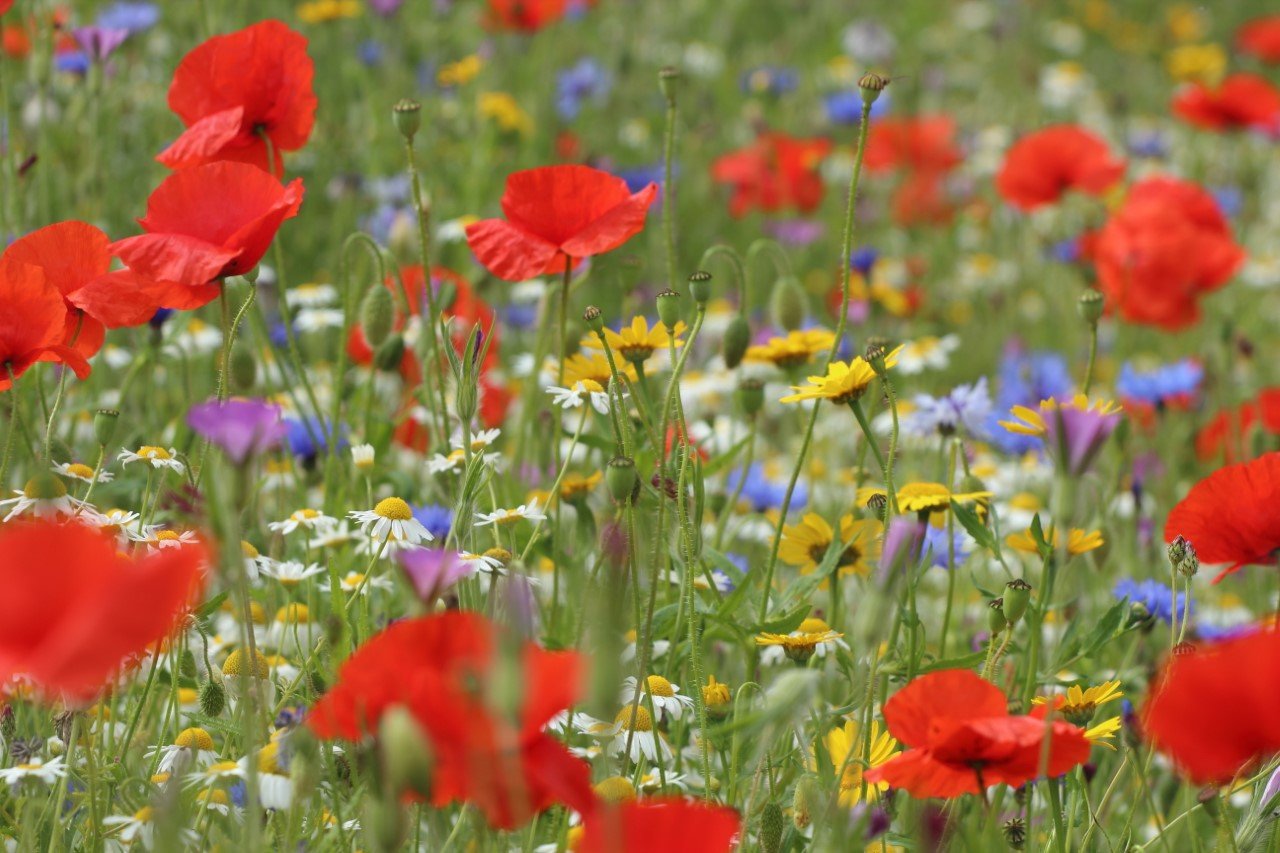
EC1 - Standard Cornfield Mixture

EM1 - Basic General Purpose Meadow Mixture

Page 3 of 8
1 2 3 4 5 6 7 8